
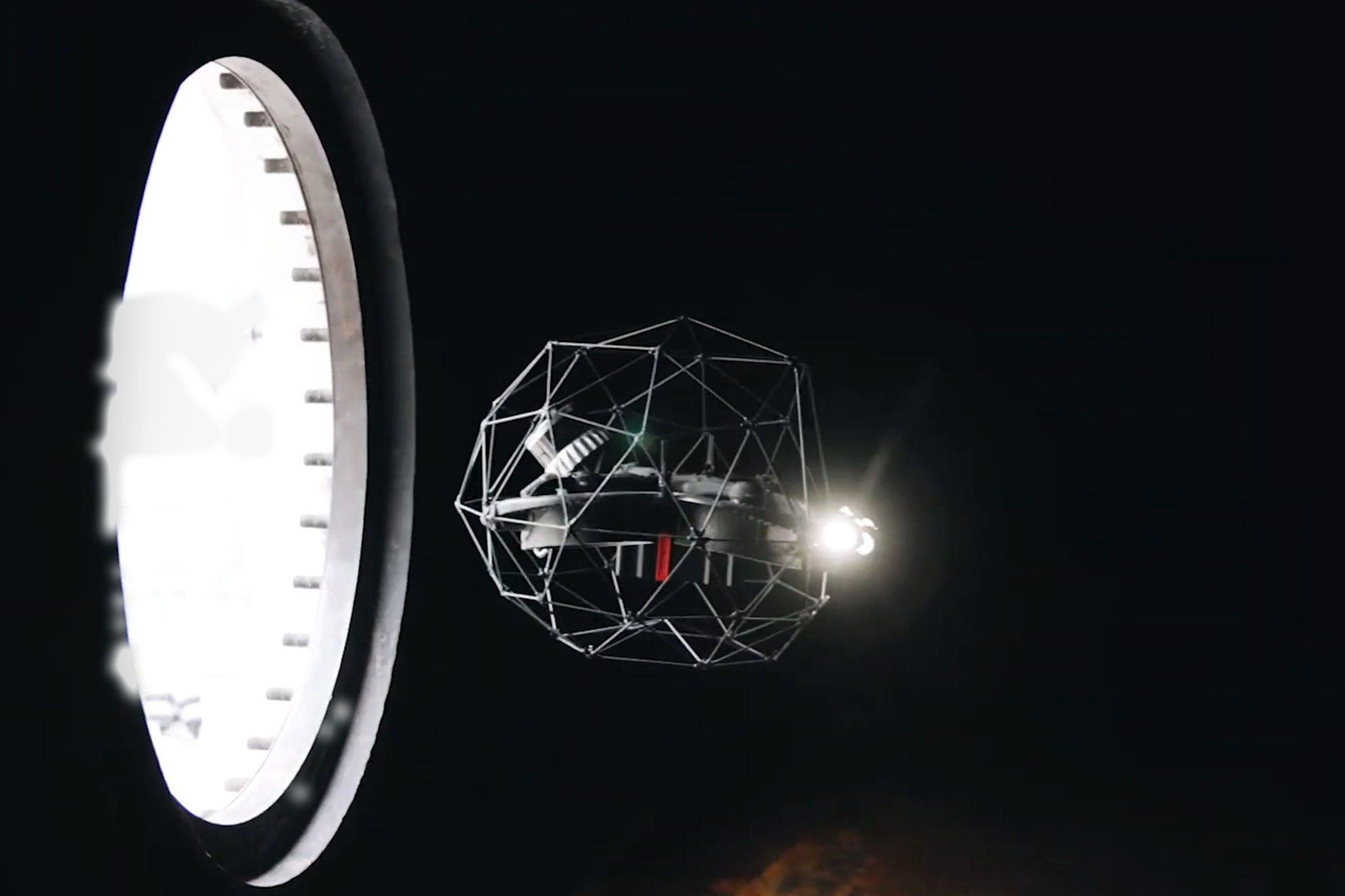
See inside the tank
without entering it
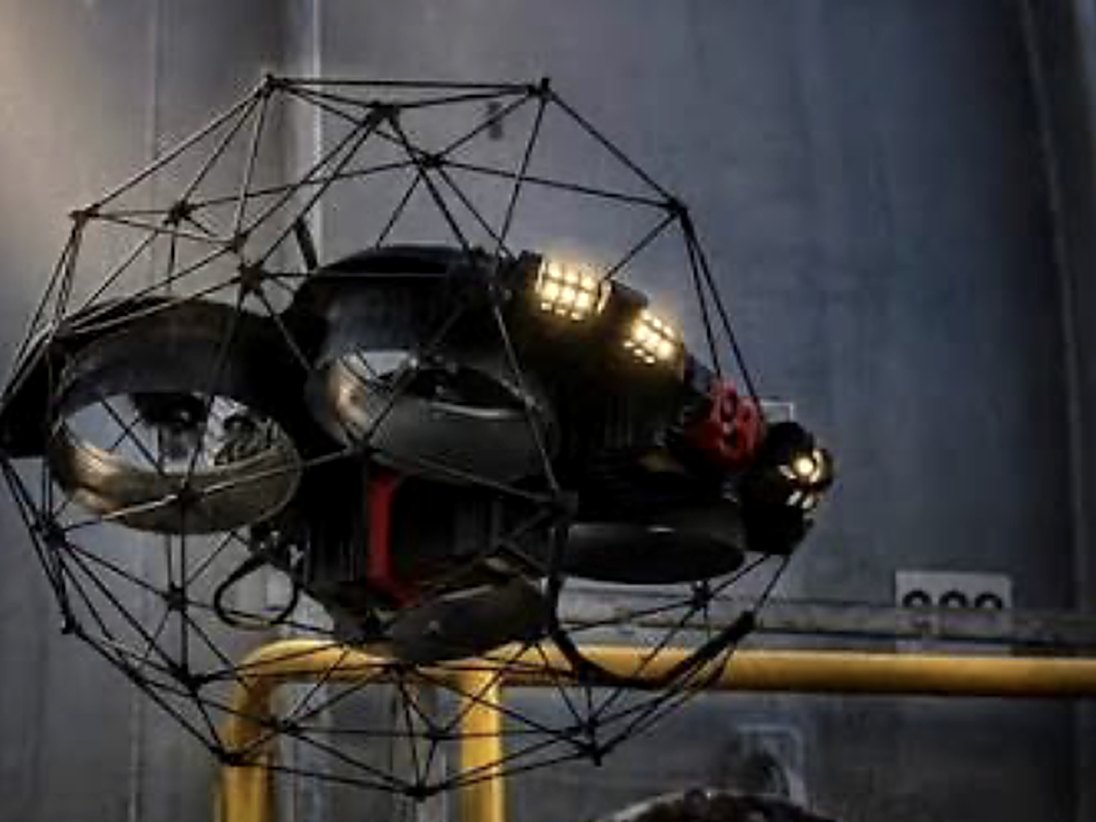
Our caged drone enters through the manhole. Receive images, temperatures, wall thickness and a 3D survey, without anyone entering the confined space and without scaffolding.
Lower risk, shorter downtime
Traditional internal inspection requires a confined-space procedure, an attendant, sometimes scaffolding, and people working in a hazardous environment. The drone takes over that inspection work.
- No one enters the confined space during inspection
- No scaffolding to reach high walls and roofs
- A shorter inspection window means less downtime
- Everything recorded for comparison at the next inspection
Four measurements, one inspection
Visual inspection
4K video and 12 MP photographs with powerful onboard lighting. Close-up views of corrosion, cracks, loose linings and deposits, even in a dark tank.
Thermography
A radiometric thermal camera (−10 to +400 °C) shows hotspots, thermal bridges and damaged insulation or refractory linings.
Wall thickness (UT)
An ultrasonic probe on the drone measures wall thickness at points otherwise requiring scaffolding. Suitable for bare steel walls.
3D survey (LiDAR)
Each flight creates a point cloud of the space. Receive dimensions and a 3D model (.e57, .las) for engineering or repair planning.
Where we fly
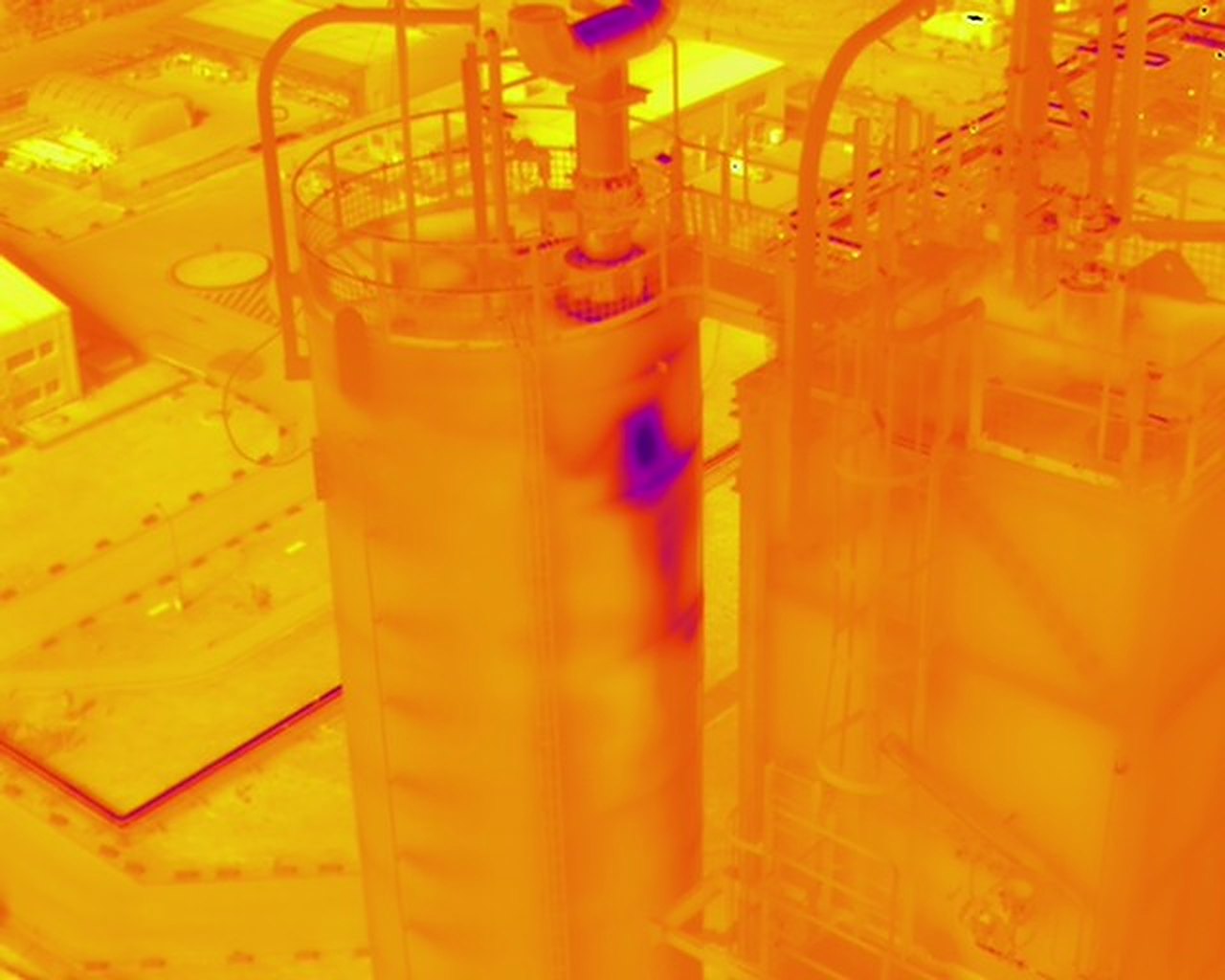
Tanks and silos
Storage and process tanks, including lined or coated tanks. Floor, walls and roof in one inspection.
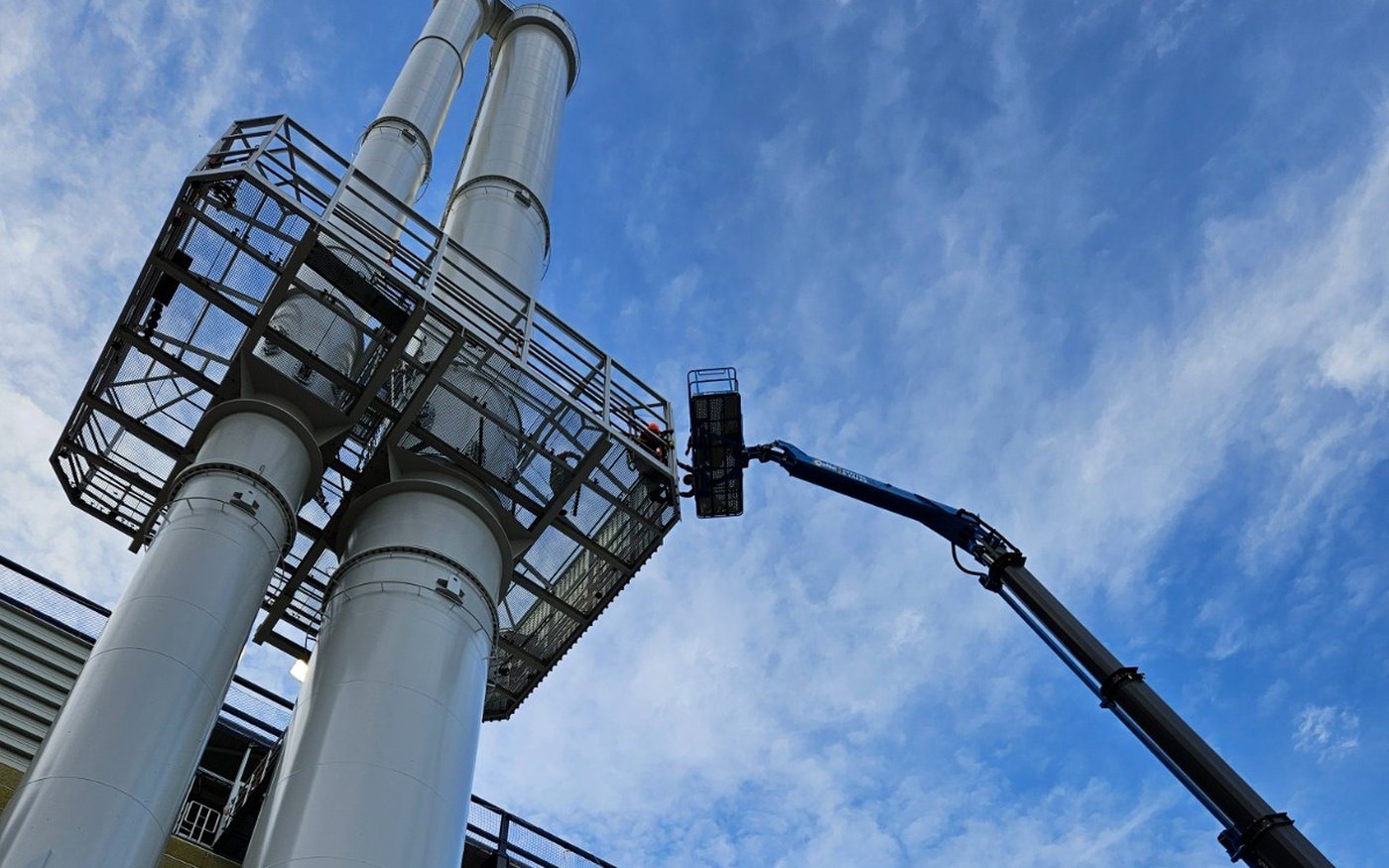
Chimneys and flue ducts
Vertical and hard to reach: the drone flies upwards, without scaffolding.
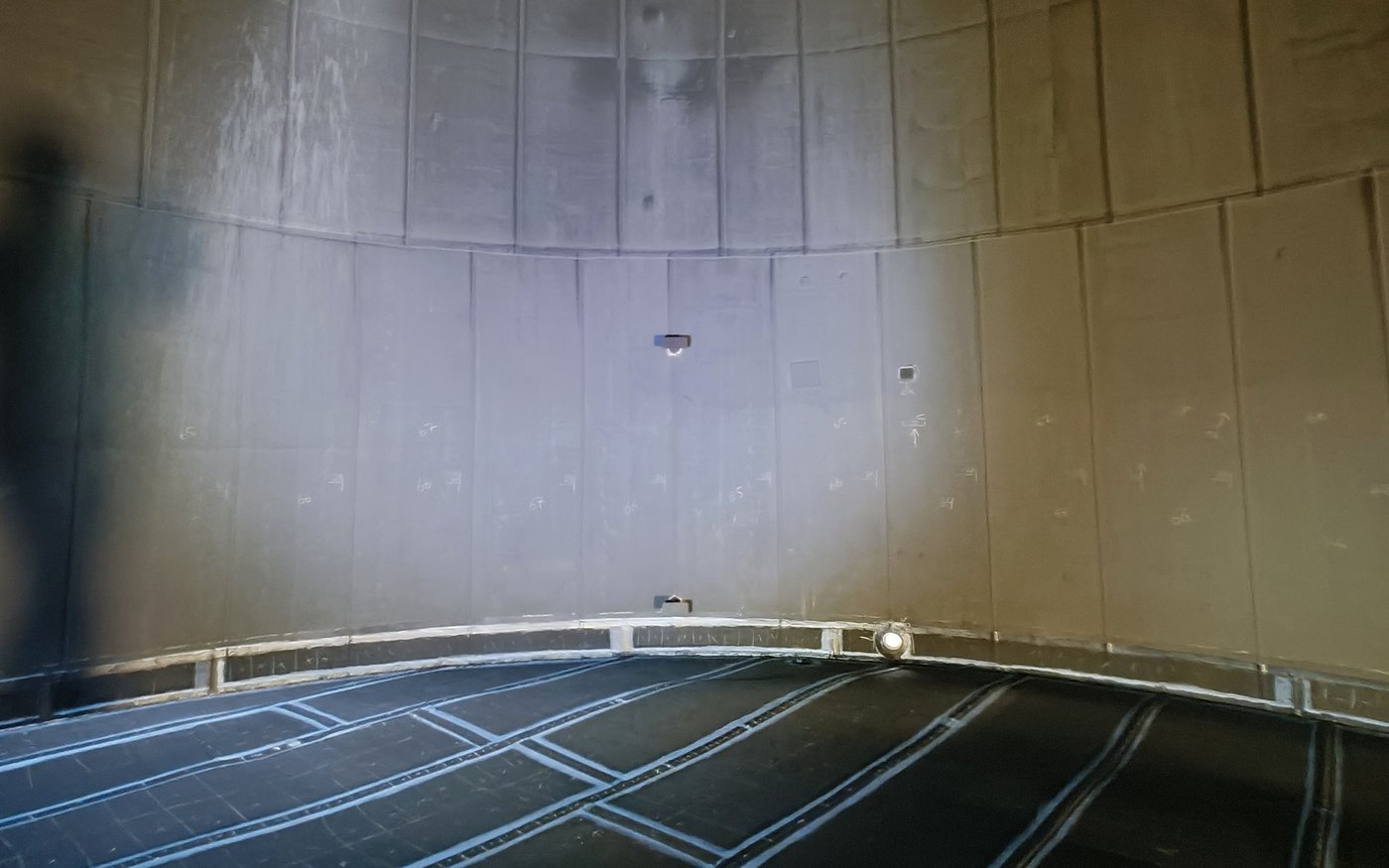
Boilers and gas scrubbers
Views of walls, tube bundles, internal components and nozzles to prepare for a shutdown.
Shafts and large pipes
Ducts and pipes that people cannot enter, or can only enter after extensive preparation.
From request to report
Request
Describe the object: dimensions, manhole, contents, lining and preferred date. We assess whether drone inspection is possible.
Preparation
We coordinate with your work permit and confined-space procedure. The space must be tested gas-free and cleared beforehand.
Flight
The pilot operates the drone from outside the manhole. Nobody enters.
Report
Receive a report with images, findings by zone, measurement results and the 3D survey, together with our assessment.
Images with an assessment
Images alone need interpretation. Our background in coatings and linings helps us assess the findings and produce a report your maintenance team can use.
- Overview of the space with a 3D survey
- Findings by zone, with photographs and locations
- Measurements: wall thickness and thermal images
- Assessment and advice for repairs or follow-up
- Raw data (video and point cloud) to keep
Good to know
How large must the manhole be?
The drone is approximately 50 × 50 cm including the cage. Most openings from DN 600 are sufficient, depending on their shape. If unsure, send a photograph and dimensions.
Can the drone fly in an ATEX zone?
No. The drone is not ATEX-certified. The space must first be tested gas-free and cleared, just as for human entry.
Can you measure wall thickness through rubber or plastic linings?
No. Ultrasonic measurement requires bare steel. In a lined tank we inspect the lining visually and thermally, and measure thickness where the steel is exposed.
Does the installation need to be shut down?
Yes. The space must be empty, safe and cleared. With no scaffolding and no human entry, the inspection window is much shorter.
Planning an inspection?
Send the object details and your preferred date. You will receive a reply within one business day.