No drawing?
We scan it.
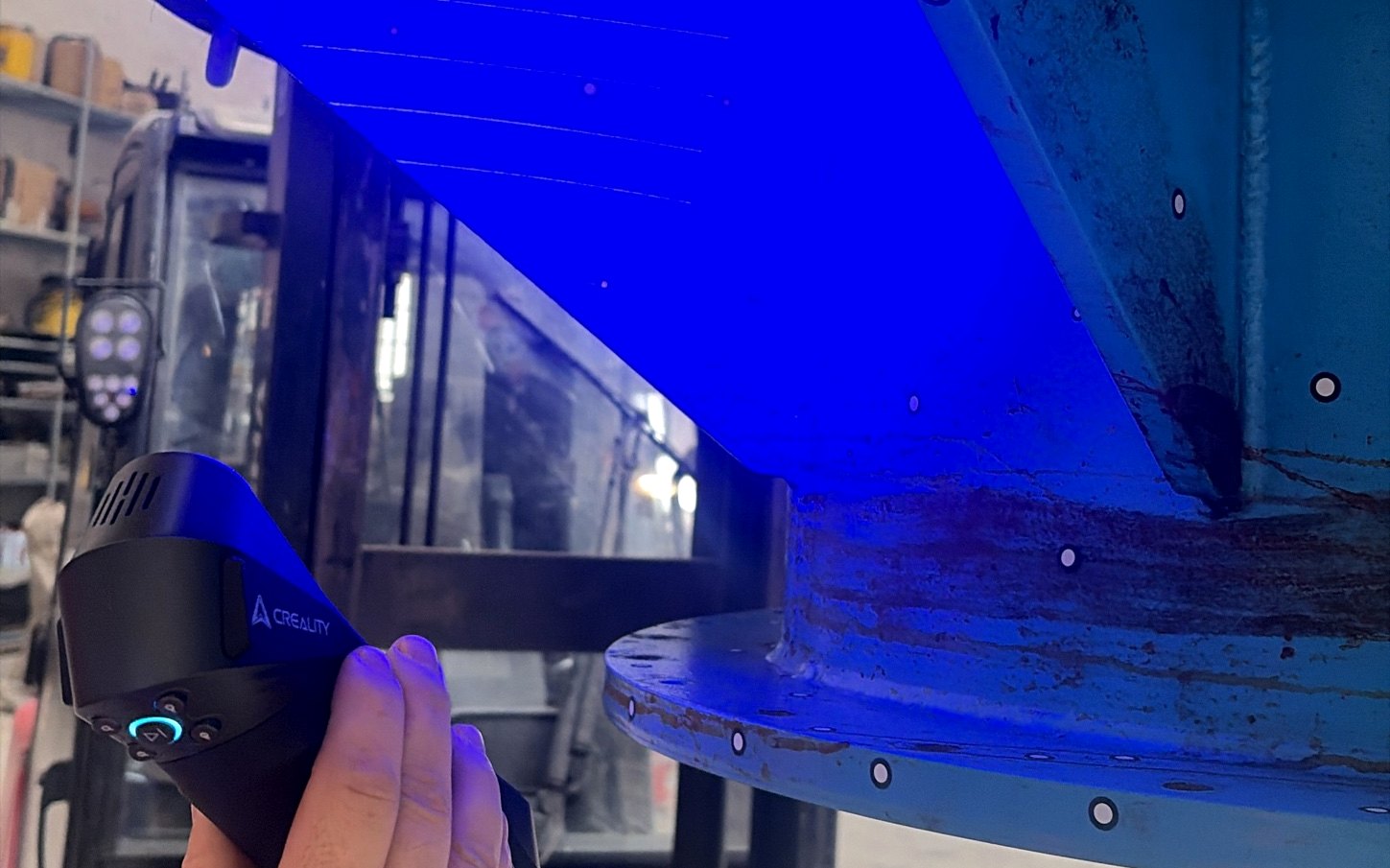
Our handheld 3D scanner captures parts, moulds and installations in our workshop or on your site. Receive a 3D model or a newly printed replacement part.
What we scan
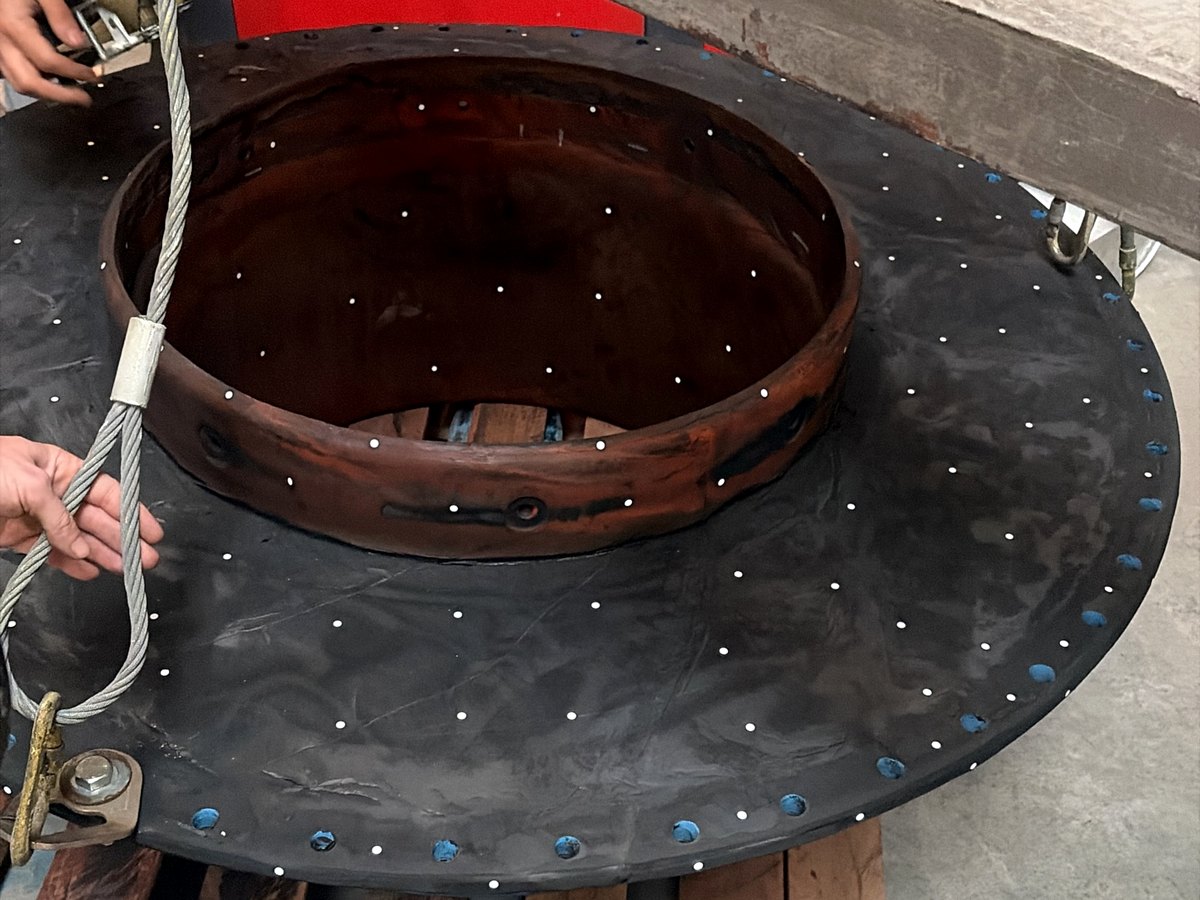
Replicating a part
A worn or broken part without a drawing. We scan the original and deliver a 3D model or a new printed part.
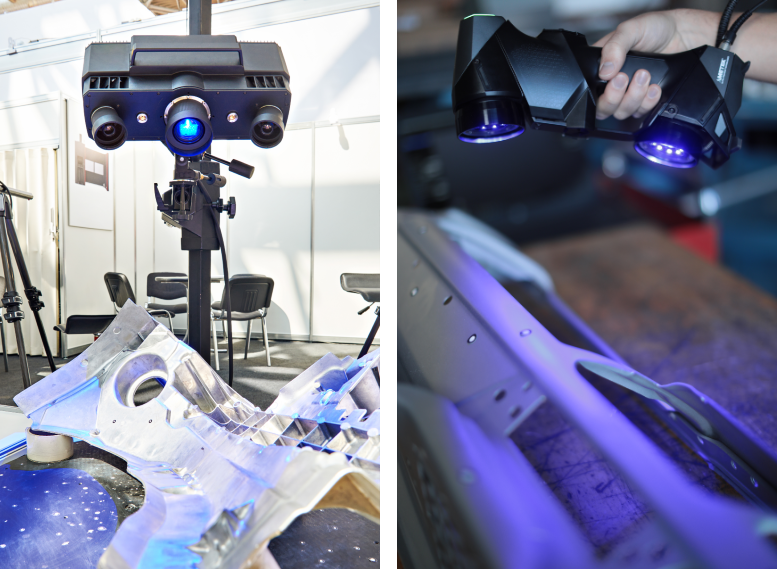
Illustration of optical 3D measurement technology.
Fitting an existing installation
A cover, guard or adapter that must fit existing equipment exactly. We scan on site so the new part fits first time.
Digitising moulds and models
Digitally preserve or adapt an existing mould, plug or handmade model so it can be reproduced later.
Creality Raptor Pro
A handheld scanner combining two technologies: blue laser for detail and infrared for speed. From small parts to objects several metres long.
- Blue laser
- For detail and accuracy: 7 parallel or 22 crossed laser lines. Ideal for engineering parts, edges and bores.
- Infrared (NIR)
- For speed and larger surfaces, without markers. Useful for large parts and objects with few reference features.
- Colour
- A built-in camera also records colour and texture. Useful for documentation and objects whose appearance matters.
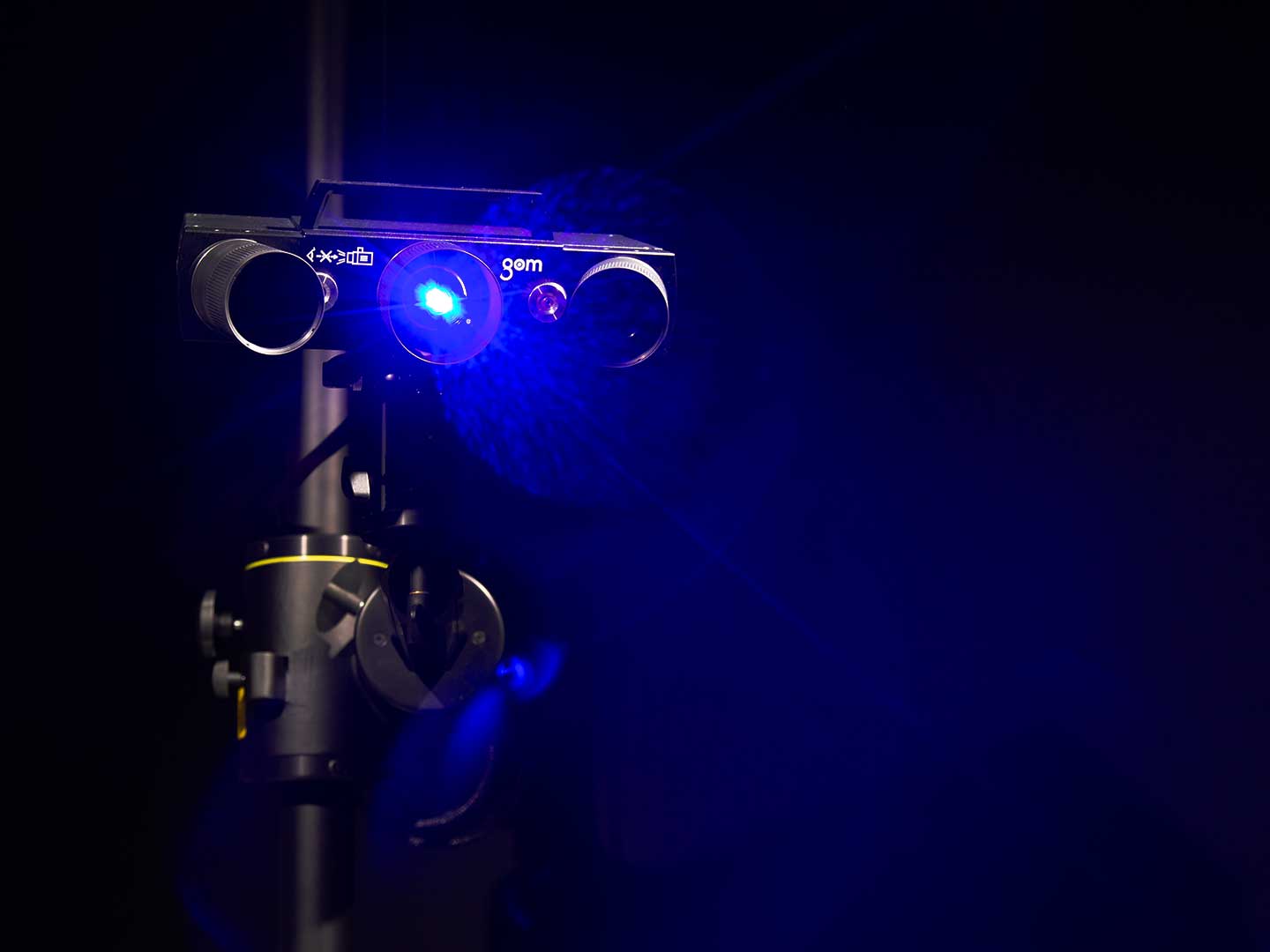
Illustration of optical 3D measurement technology.
From original to new part
Scanning and printing under one roof: we capture the original and print a replacement, up to one metre in one piece, using engineering materials.
More about 3D printingFrom request to file
Request
Describe the object: dimensions, material, location and what you need the scan for.
Scanning
Ship the part to us, or we scan on your site. Visits and collection are not available. Wireless scanning lets us move around large objects.
Processing
We merge the scans into a clean 3D model and check the dimensions.
Delivery
Receive the 3D file, or let us print the part for you.
Good to know
How accurate is a scan?
The manufacturer specifies accuracy up to 0.02 mm with the blue laser on smaller parts. For larger objects, deviation increases with length (about 0.08 mm per metre). Include any strict tolerances in your request.
How large or small can the object be?
From a few millimetres to objects several metres long. Large objects are scanned in sections, then merged.
Which file will I receive?
Usually a 3D mesh such as STL or OBJ, suitable for printing or importing into most 3D programs. If you need an editable CAD model, mention it in your request.
Can shiny or black surfaces be scanned?
Usually, especially with the blue laser. Highly reflective or transparent surfaces may require a temporary matte coating; we discuss this in advance.
Something to scan?
Send a photograph and the object’s dimensions. You will receive a reply within one business day.